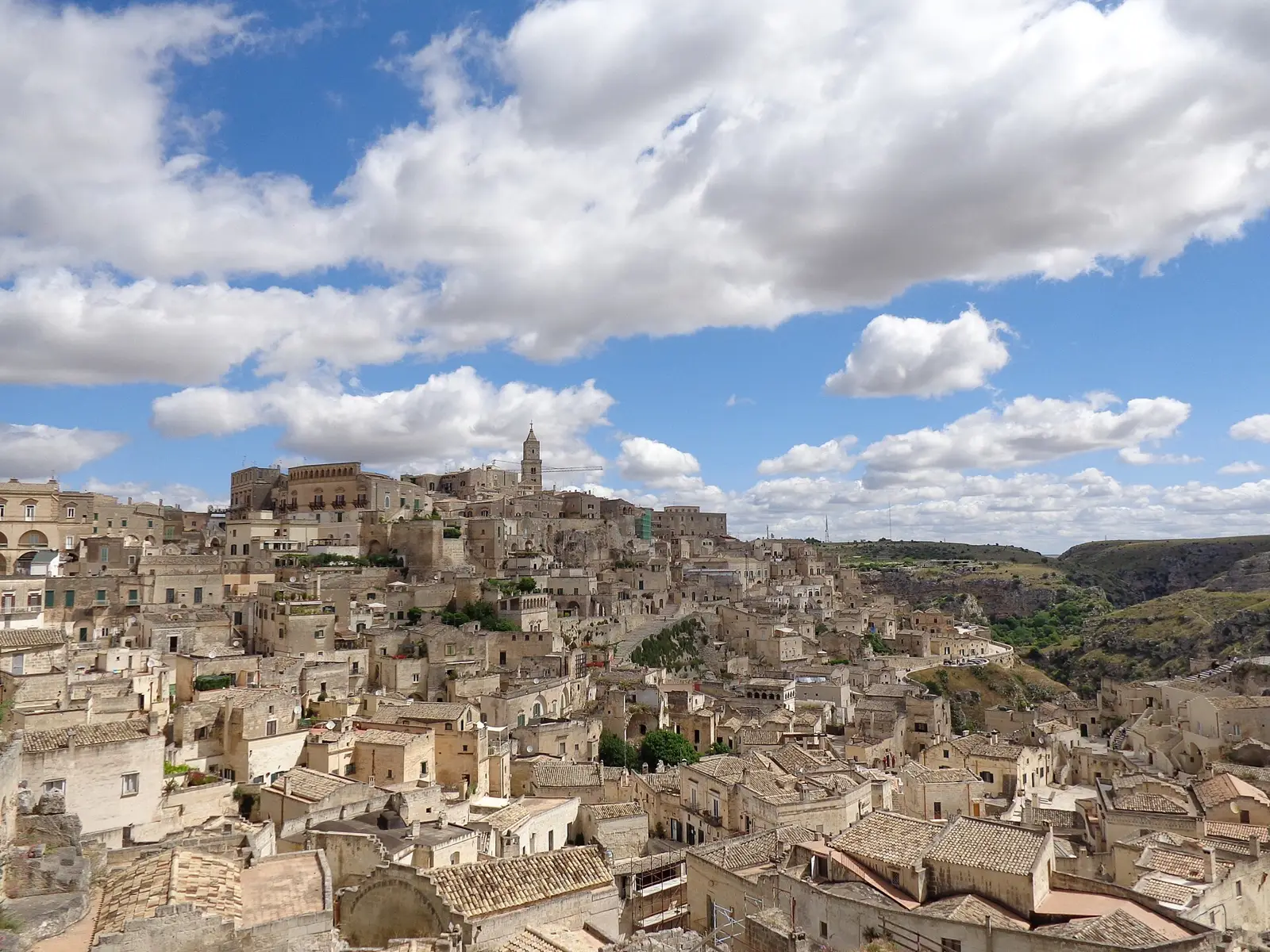
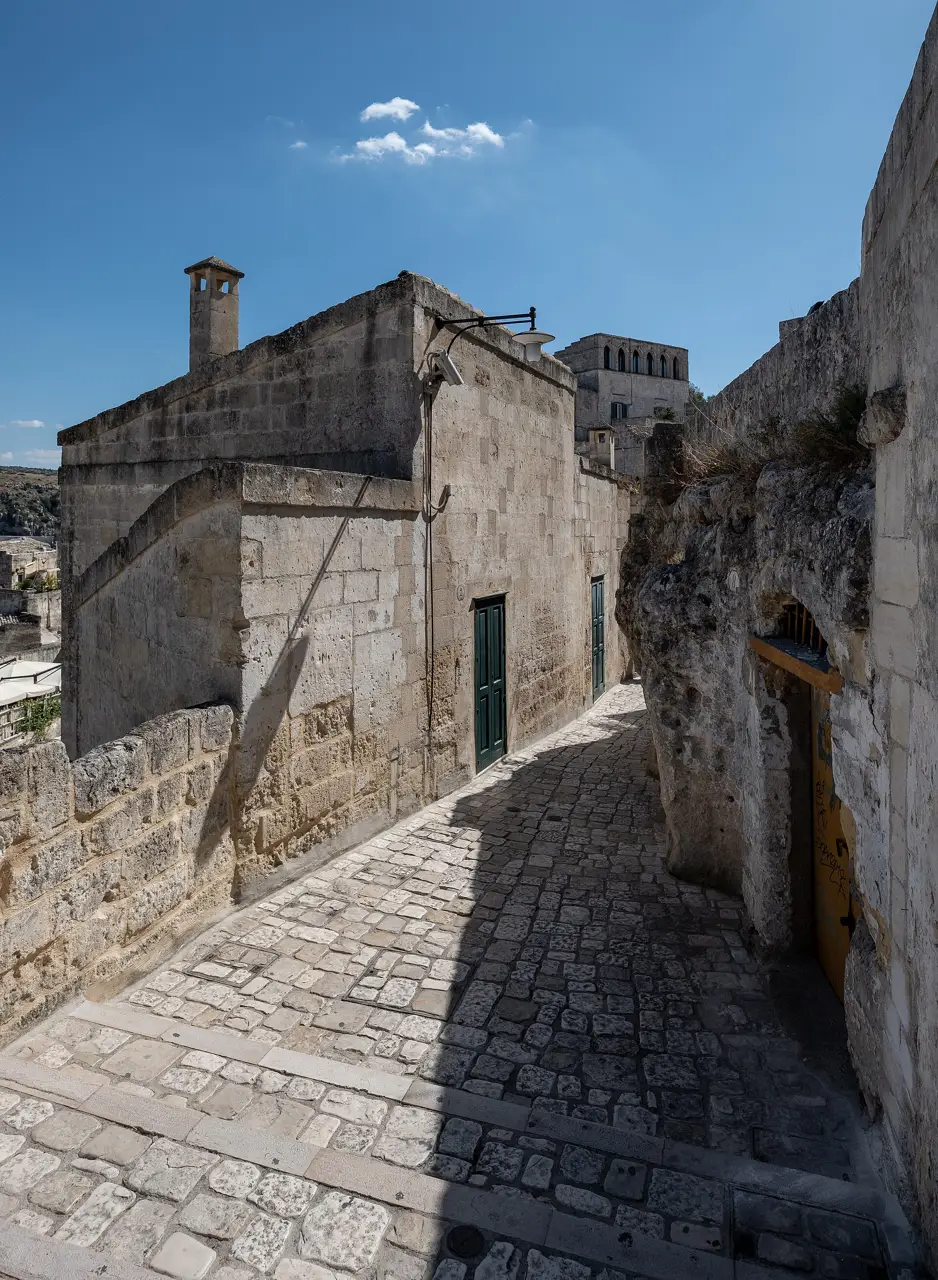
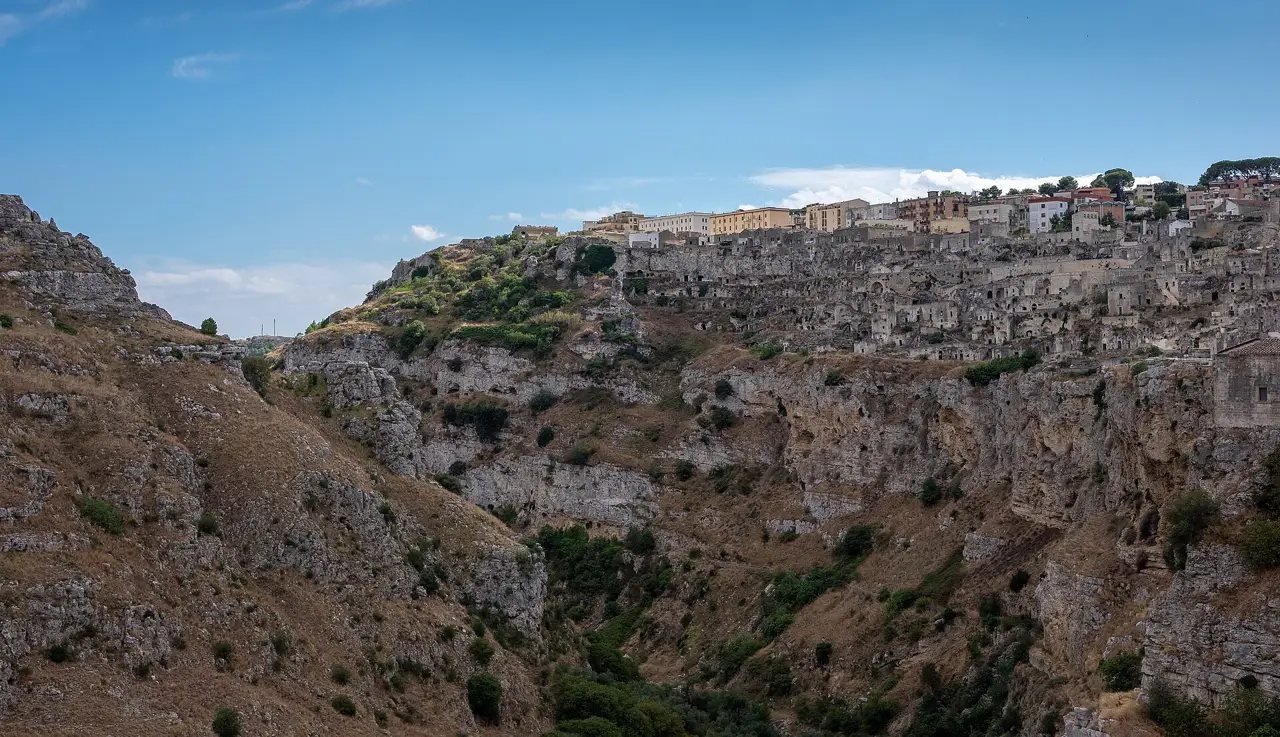
Matera sits above a ravine in Basilicata, in the south of Italy, and the oldest part of it is dug into the rock as much as built on it. The old town is called the Sassi and falls into two districts, Sasso Caveoso and Sasso Barisano. People are thought to have lived here as early as 7000 BC. Between 1952 and the 1970s the Italian government moved most of them into new housing on the plain above, and for a long time the old town was somewhere to be avoided rather than visited.
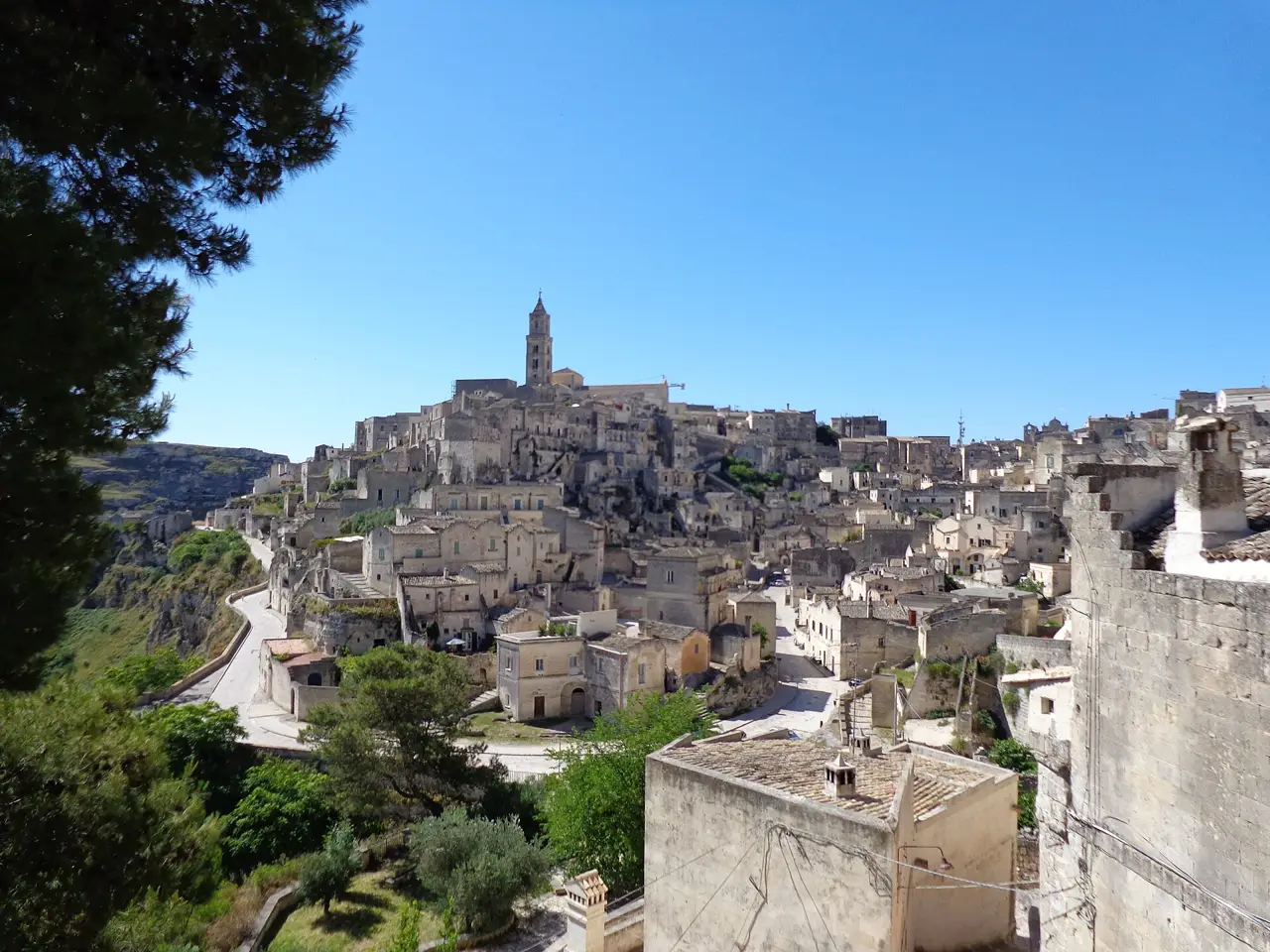
What came next is the reason to go. UNESCO listed the Sassi as a World Heritage Site in December 1993, together with the Park of the Rupestrian Churches, and regeneration followed with support from the EU, the Italian state and UNESCO. Rooms that had been abandoned began to reopen as hotels and restaurants, and in 2019 Matera was European Capital of Culture. Film crews found it long before most travellers did: it appears in The Passion of the Christ, Wonder Woman and No Time to Die.
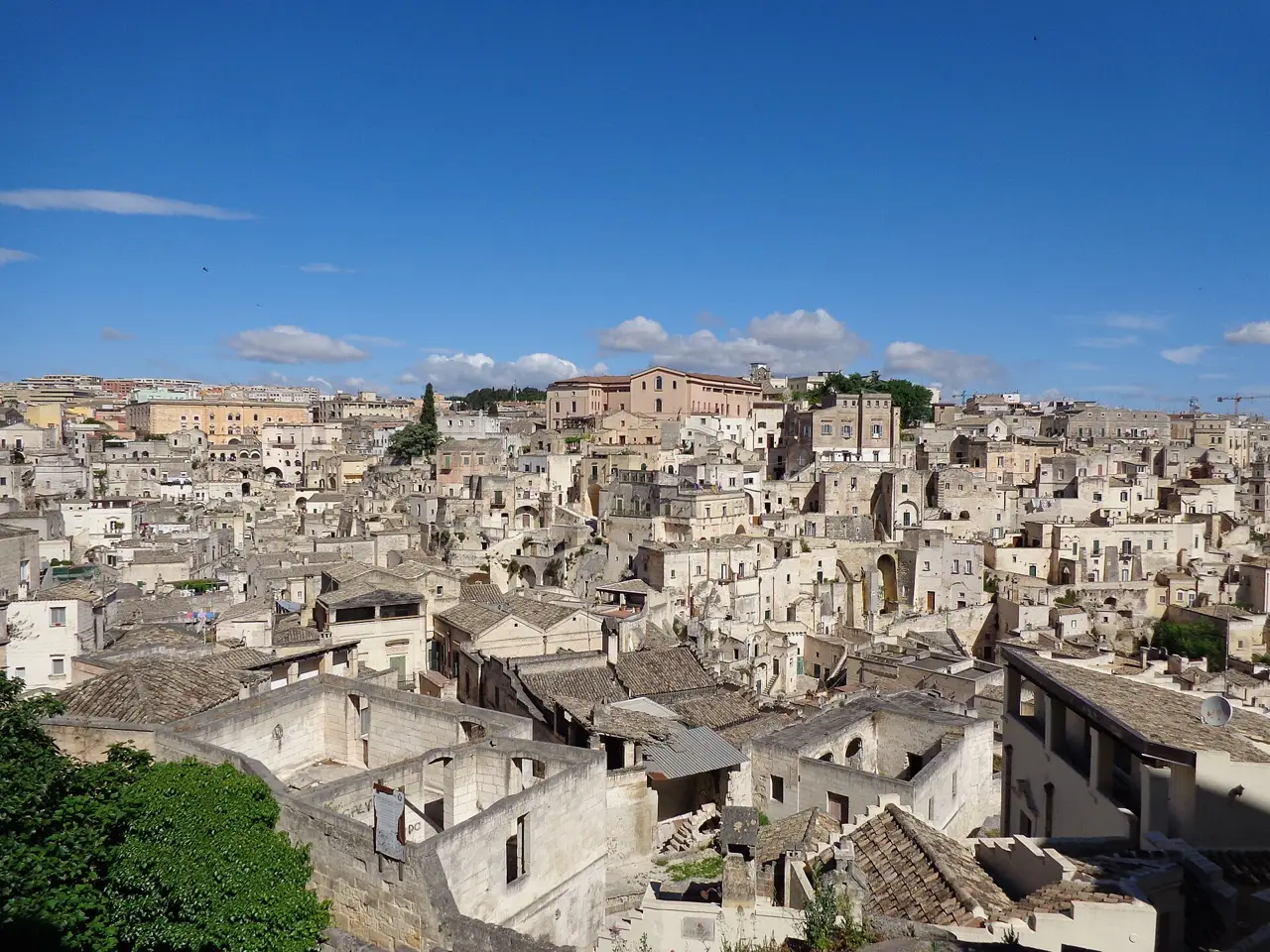
Where to stay
Stay in the Sassi itself if you can. Sextantio Le Grotte della Civita has 18 rooms and suites built into cave dwellings in the oldest part of the old town, restored with the original features kept where possible, a candle-lit dining room in a former church and a terrace over the Murgia park. Sleeping inside the rock is the closest you will get to understanding why people stayed for thousands of years, and why it took a government to move them.
There are other ways in. Corte San Pietro is a smaller renovated cave-house of 12 rooms on Via San Pietro Caveoso, and Palazzo Gattini, with 20 rooms in a palazzo at the highest point of the old town beside the cathedral, suits anyone who would rather sleep above the caves than in them.
Where to eat
Baccanti, on Via Sant'Angelo, fills a complex of former caves facing the old town's rock churches, with a terrace and a modern kitchen built on local traditions. It is listed in the Michelin Guide and takes reservations by phone or through its website. For fish, Il Mare nei Sassi on Via Rosario cooks contemporary regional food in an airy room with a rooftop terrace over the Sassi, and Soul Kitchen on Via Casalnuovo gives Basilicata cooking a modern turn, with orecchiette, turnip greens and anchovy among the dishes.
A walk worth doing
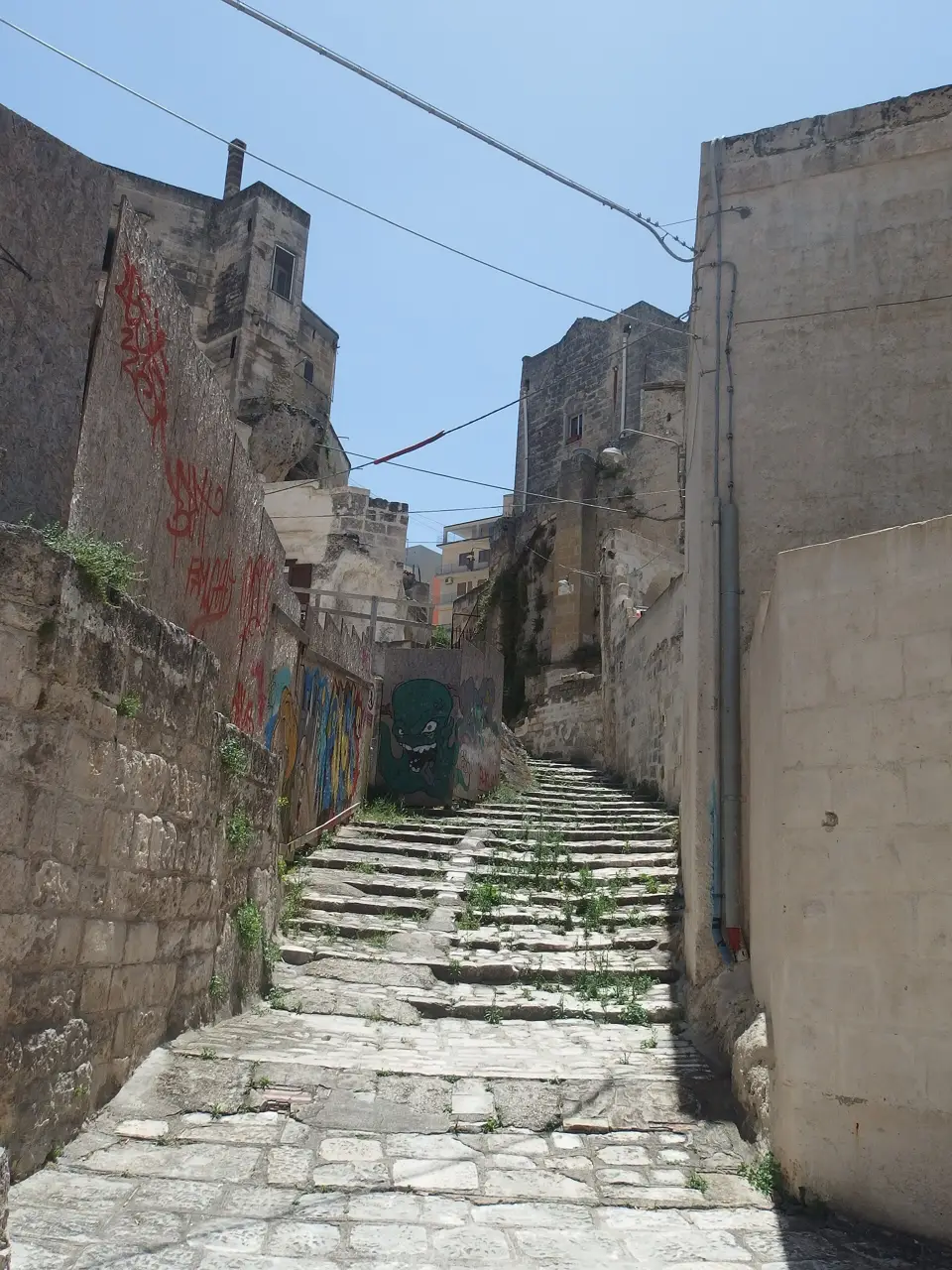
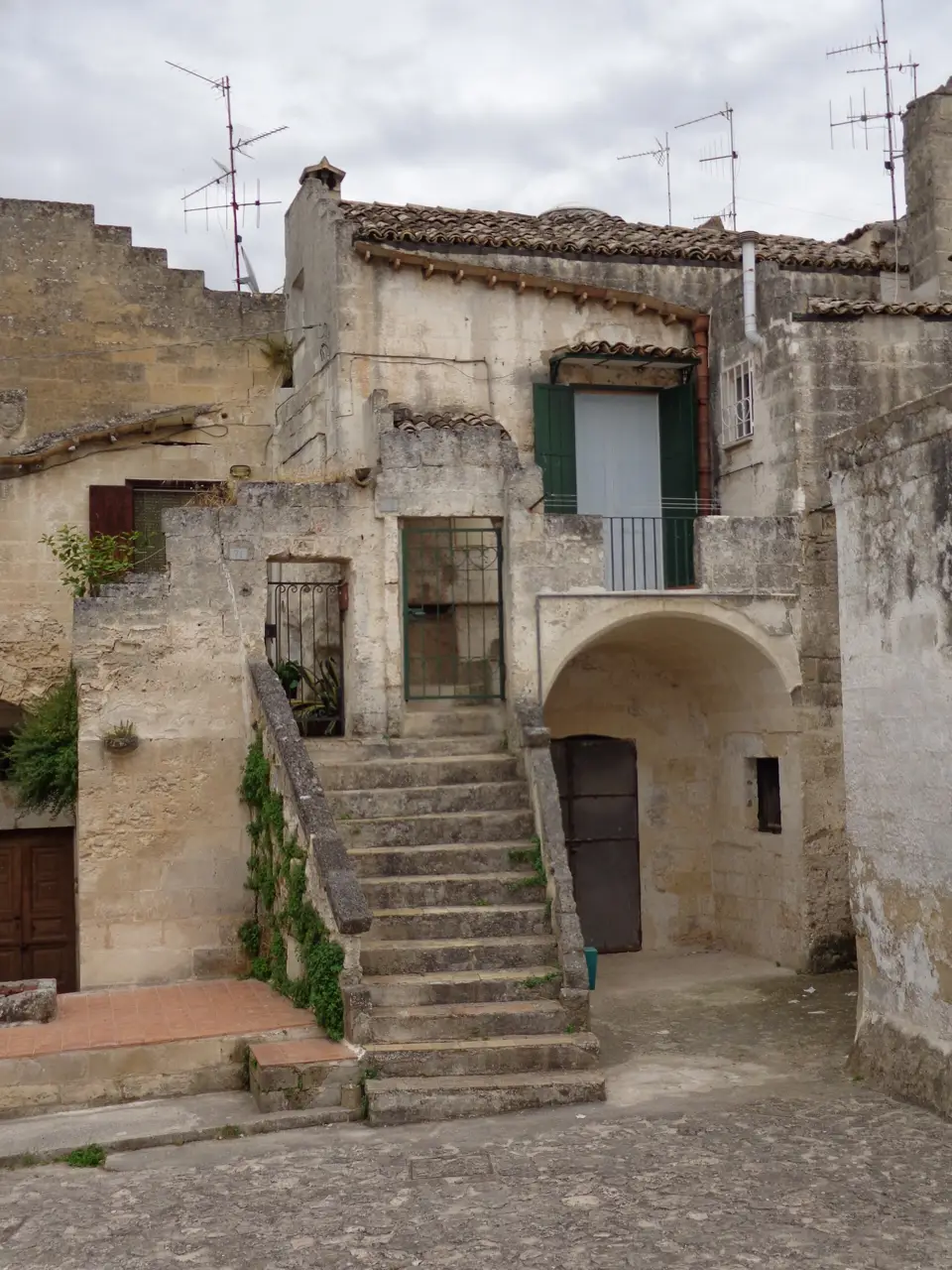
It is a town to walk rather than to tick off. A loop of about 3.5 km takes in Piazza Vittorio Veneto, the Palombaro Lungo cistern beneath it, the cathedral, Piazza San Pietro Caveoso and the Casa Grotta di Vico Solitario, a furnished cave home, with belvederes along the way. The streets are stone steps and doors open straight on to staircases, so wear shoes with grip. Opening hours change by season and day, so check them before you plan around a visit.
When to go, and for how long
Go early or stay late. The Sassi are quietest before the day trippers arrive and after they leave, which is the case for sleeping there: a day is enough to walk the loop, and a night gives you the old town at its quietest. Traffic is restricted and the lanes are narrow, so most visitors park in a designated lot or garage and walk down.


