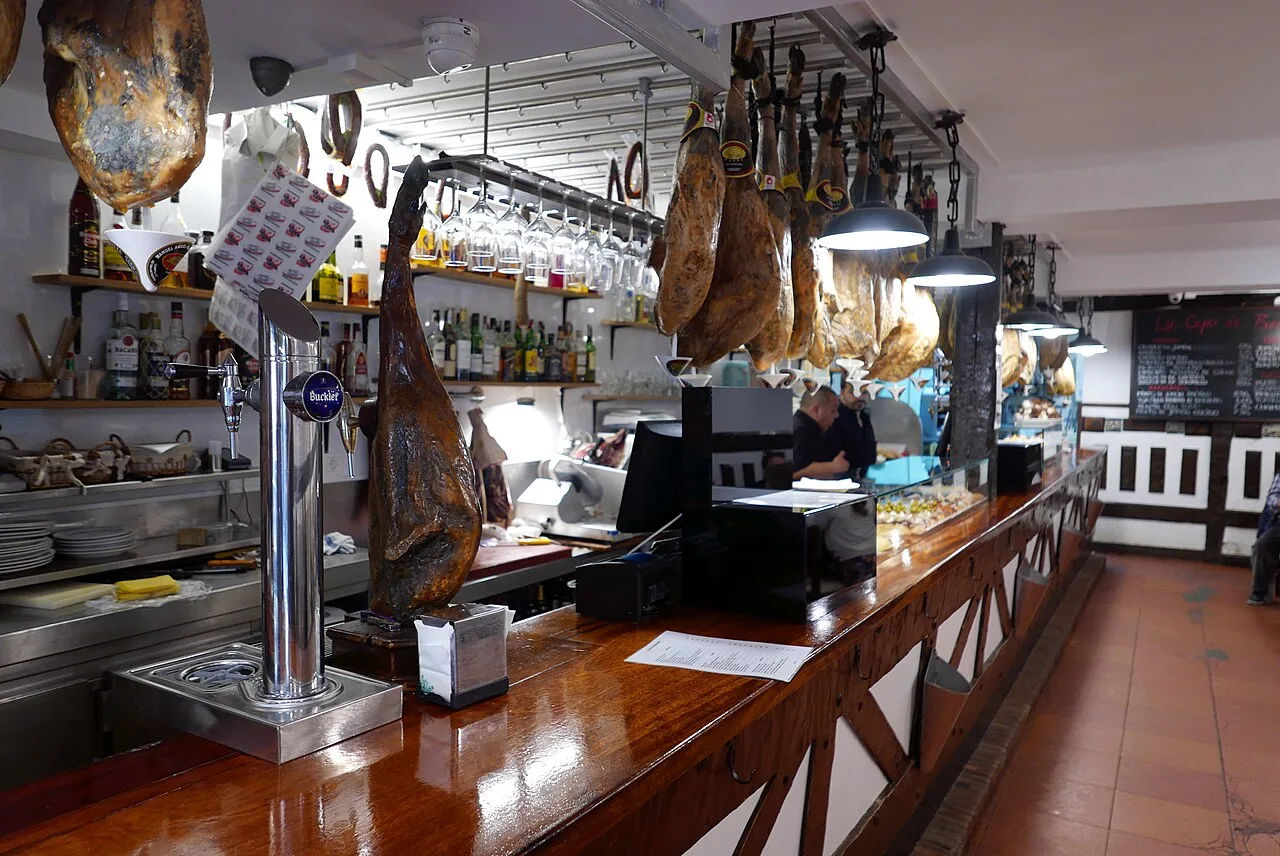
The pintxo bar is the engine of San Sebastián's old town, and the way it works is a better organised system than it looks. The tradition of moving between bars is called a txikiteo, or poteo: one or two pintxos and a small drink at each stop, then on.
The rules
Locals go in cuadrillas, groups of friends who move together. The traditional approach is one pintxo and one drink per bar before moving on, so an evening is four, five or six bars, and the crawl is the dinner. Start around 8pm and arrive hungry.
Cold pintxos sit on the counter and can be taken directly. Hot pintxos are ordered from the bartender and cooked in the kitchen, often from a blackboard or menu. Payment is generally settled when you leave. Groups often take turns paying for rounds or share a kitty.
What to drink
Keep the glass small. A zurito is a small beer, a small glass of wine is the standard alternative, and txakoli is the local answer: a dry, high-acid Basque white, poured in short measures. The aim is to stay clear-headed enough to reach the sixth counter.
What to eat
The gilda is the classic: an anchovy, a green olive and a pickled guindilla pepper on a skewer. Tortilla de patatas is the other test; bars have loyal followings for their own versions, and popular ones can sell out. Foie gras seared on the plancha, txangurro (spider crab), kokotxas (hake cheeks) and txuleta (aged beef) sit among the Basque specialities.
Where to start
Gandarias, on Calle 31 de Agosto, has a broad pintxos selection alongside traditional Basque cooking. Casa Urola, on Fermín Calbetón, offers traditional cold pintxos plus classic and seasonal hot ones. Atari Gastroleku, beside the Basílica de Santa María del Coro, adds a more contemporary approach on traditional foundations.