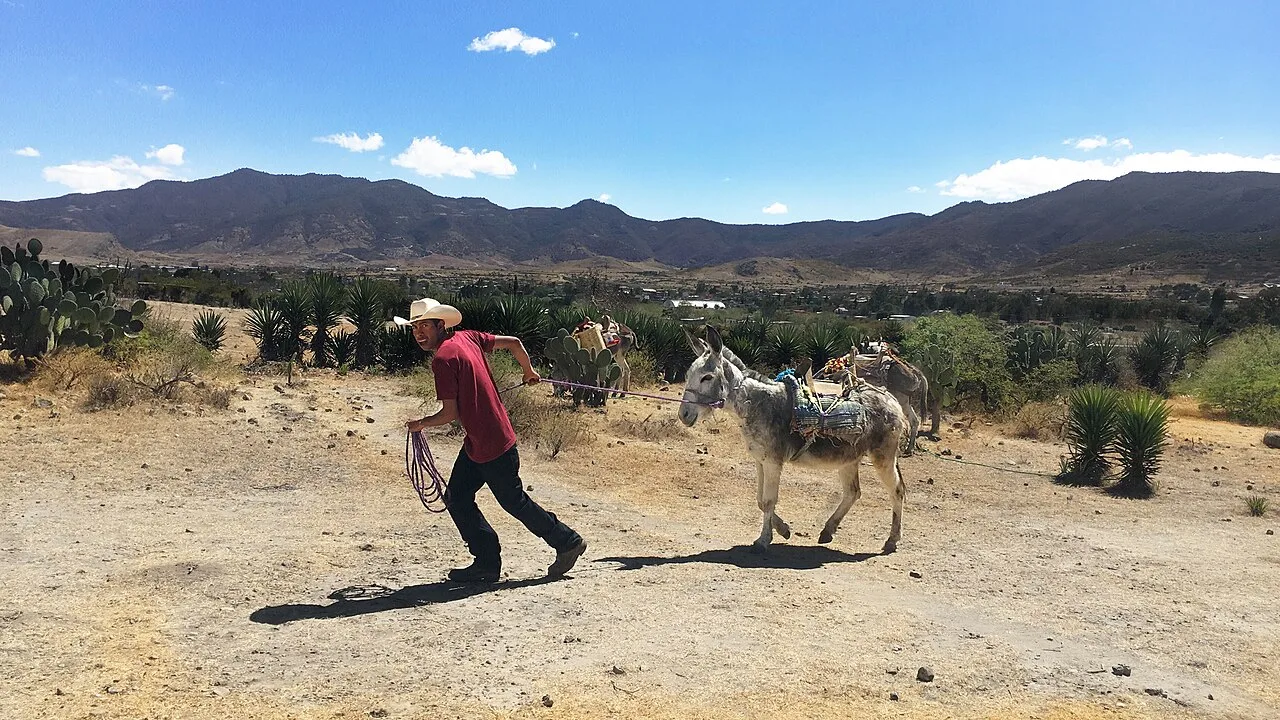
Mezcal is made in several Mexican states, but Santiago Matatlán, a small village just east of Mitla in Oaxaca, has put the claim on a sign: world capital of mezcal. The village is lined with palenques, the working distilleries where the spirit is made.
What a palenque shows
Visitors can see the whole process, from harvesting the agave to distillation. Traditional production commonly runs through the same stages: the agave hearts are cooked, crushed, fermented and distilled, and the details of each stage vary from one family to the next. Producers range from small family distilleries to larger-scale operations, all using traditional techniques.
What to taste
Espadín is the workhorse agave and the one most visitors begin with. Tobalá is a wild agave and typically a rarer bottle. Beyond the plant, the age labels are the ones used for other spirits: joven or blanco unaged, reposado rested in wood and añejo aged longer. A tasting line-up often runs through several of these.
How to visit
The distilleries are working farms rather than visitor centres, so a guide or an arranged tour is the practical route, and hours change. Plan to see the agave fields and the stills, then taste. Sip slowly and ask the producer how the mezcal was made; the answer is the point of coming.