
Look up at 15 Old Bailey and the building gives its age away before any plaque could: mansard roofs, richly carved mouldings and ornamental columns, all the confident decoration of 1874. It was built as the Spiers & Pond hotel, reputed to have been the first London hotel with electric light, and it stands opposite the Central Criminal Court with St Paul's a short walk away. A reconstruction of the interior in the 1980s turned it into offices and stripped out much of its Victorian character, though the outside survived, now Grade II listed. As Hyde London City it is a hotel again, and the first British address for a brand that grew out of the Los Angeles club scene and belongs to Ennismore.

Repairing the bones first
Studio Moren, the London practice behind 1 Hotel Mayfair and Park Hyatt London River Thames, acted as both architect and interior designer, and the order of work is the interesting part. Plaster cornicing, tall skirting boards and timber floors were put back, with new bespoke joinery made to sit beside them. At the back, a new extension over a former lightwell was drawn to mirror the original building; because a substation next door set structural limits, the team used brick slips to make the new work read as old.
The building that brought electric light to London's hotels now runs on vinyl and raki.


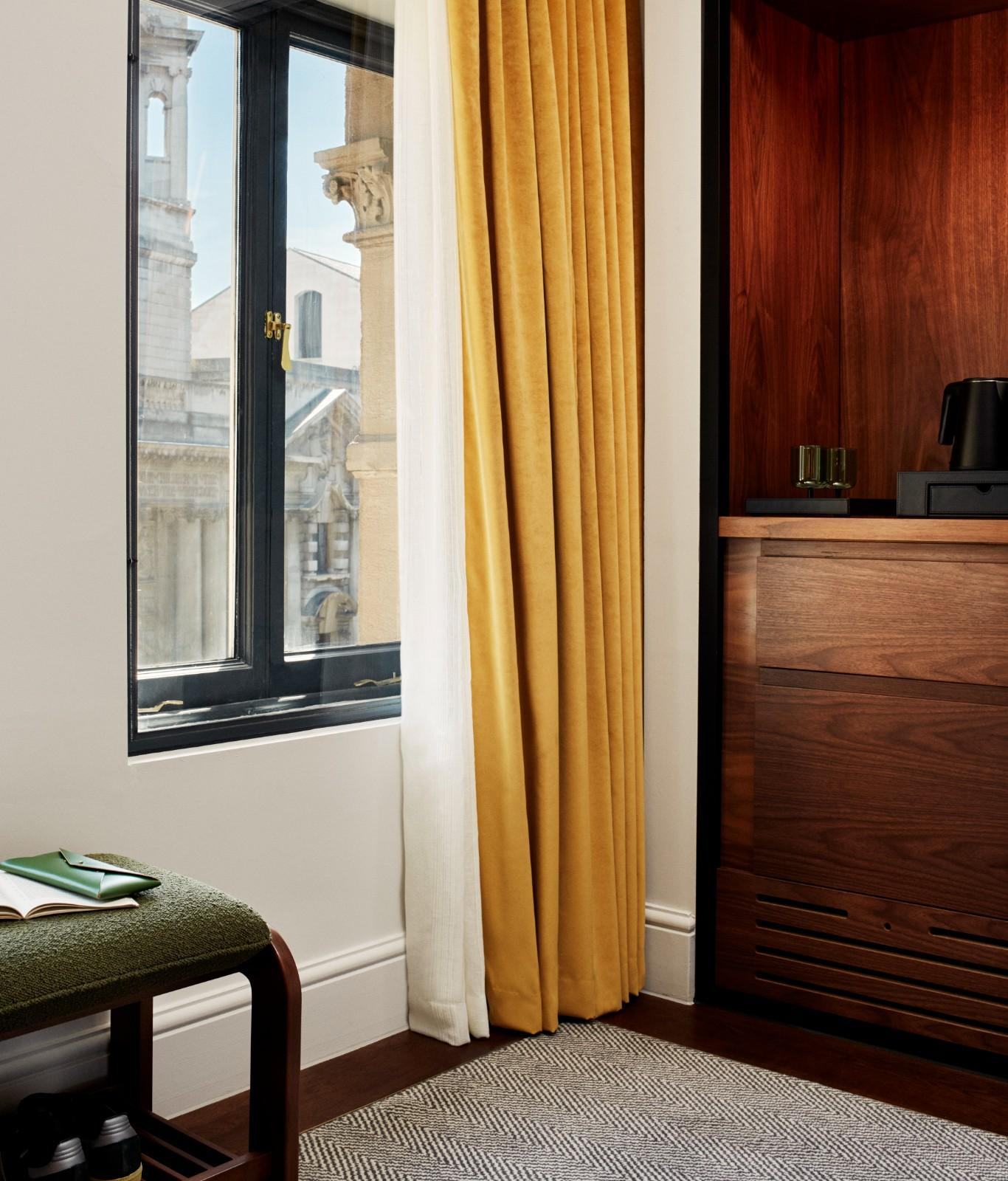
Tom Thorogood, the studio's co-head of interiors, describes the aim as Victorian grandeur given a playful, modern turn. The joinery, furniture, lighting and even the tile colours were designed for the building, which is why the odd pieces feel deliberate: a desk chair on three legs and a bench for luggage, beds raised on bobbin legs in place of the usual divan.

Wallpaper, illusionists and a sleeping face
The rooms switch between deep green and blue colour schemes, with velvet, polished timber and soft, organic shapes. Timorous Beasties wallpapers, maximalist in scale, refer to nineteenth-century Britain, botany and the patterns of the kaleidoscope. The bathrooms are where the wit concentrates, and Thorogood cites Victorian illusionists as the source: rippled stainless-steel ceilings threaded with fibre optics, a marble floor laid in three-dimensional perspective, a Muraspec wallcovering that borrows from Darwin's peppered moth experiment, and a Newmor Wallcoverings plaster in which a concealed face appears when seen through a camera lens. An illuminated sleeping face takes the place of the Do Not Disturb sign.

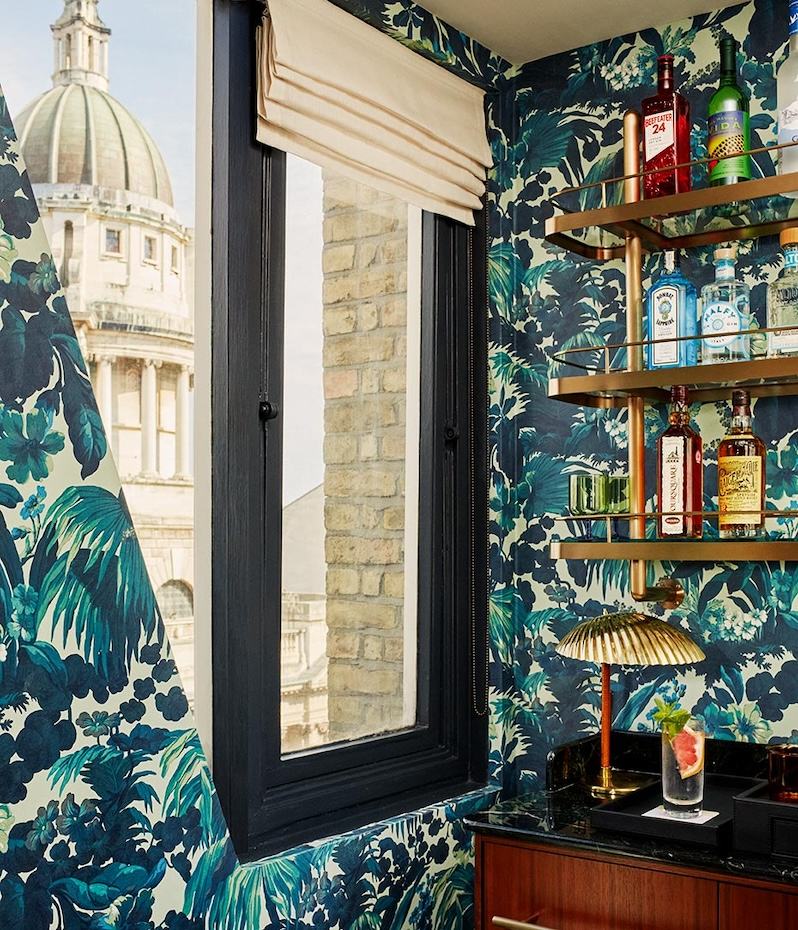
The Los Angeles upbringing shows in smaller things. The dressing gowns are cut like surf ponchos and the slippers are chunky slides, which sounds like a joke and is rather practical.
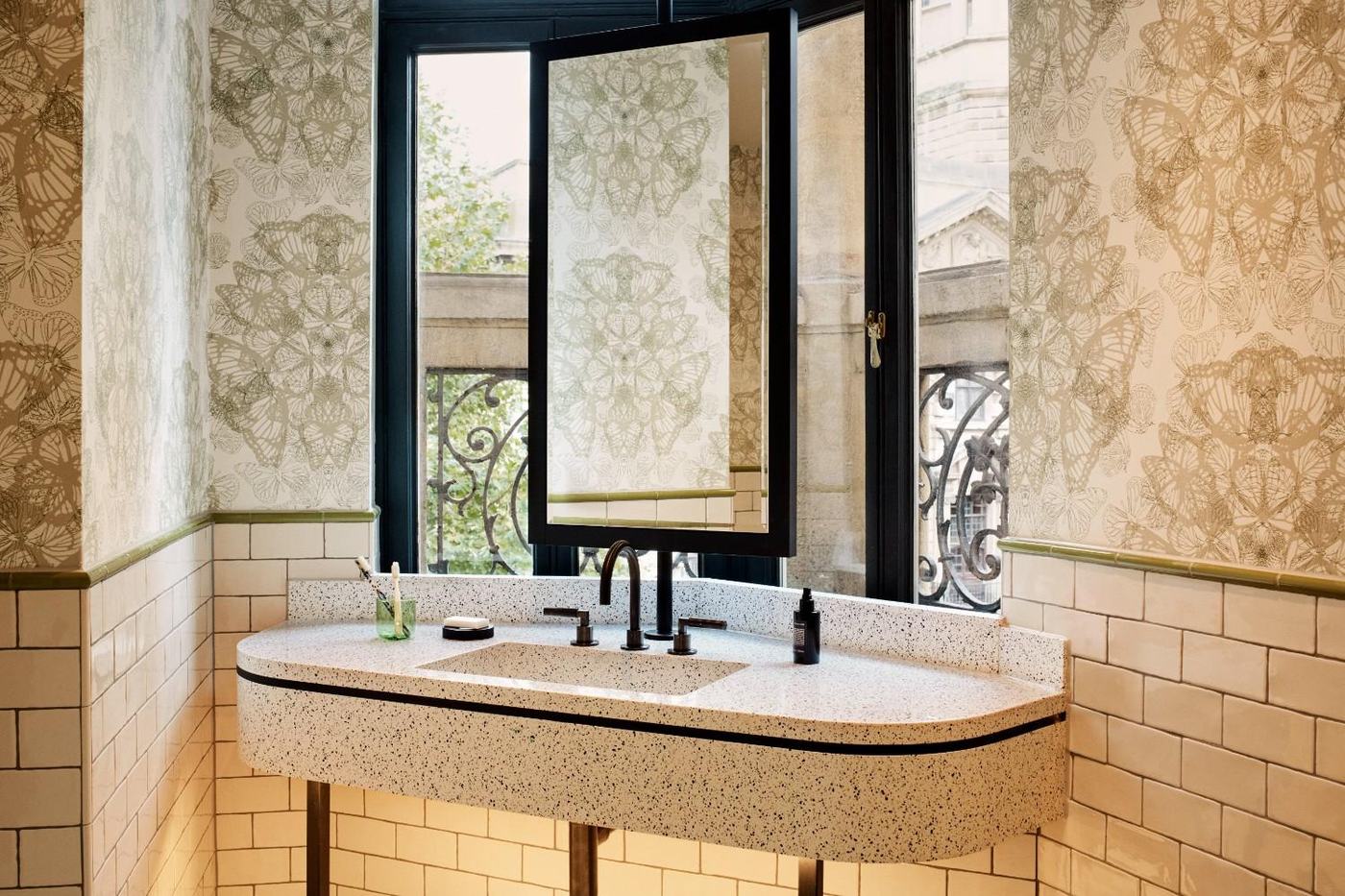
The room to book
Ask for the Headliner Suite. It sits in the eaves under a five-metre ceiling, looks across to St Paul's and the London skyline, and is the one place in the building where the Victorian roofline is felt from the inside. House of Hackney supplies a botanical wallcovering inspired by Marianne North, the Victorian botanical artist, the furniture is bespoke with dovetail joinery, and there is a marble-topped bar of its own for the evening.
Turkish at street level, vinyl below
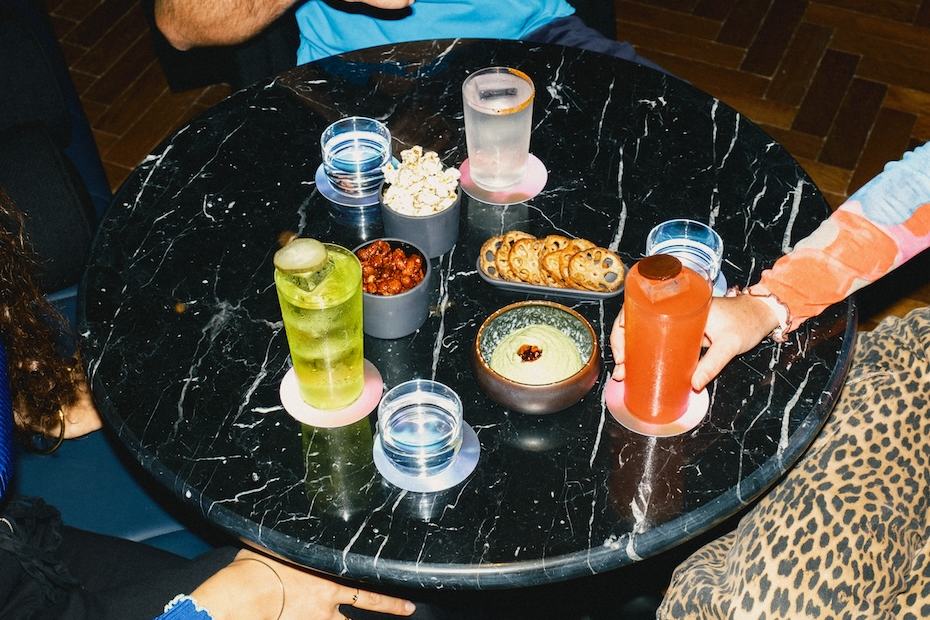
Leydi has its own entrance on the street and is run on its own terms. Selin Kiazim wrote a communal menu of Turkish dishes, among them muhammara of walnut and sun-dried red pepper, garlic yoghurt with Urfa chilli oil, freshly baked pide, and meat and fish from the mangal; the mixed grill is the most complete way to order. The room, designed by Studio Moren with Ennismore's restaurant arm Carte Blanched, takes its mood from the photographic journal A Victorian Traveller in the Middle East: trefoil arches, blush plaster walls, rattan on the banquettes, a great deal of planting and a chandelier that nods to the hotel's history. Kevin Patnode builds the cocktails around raki.
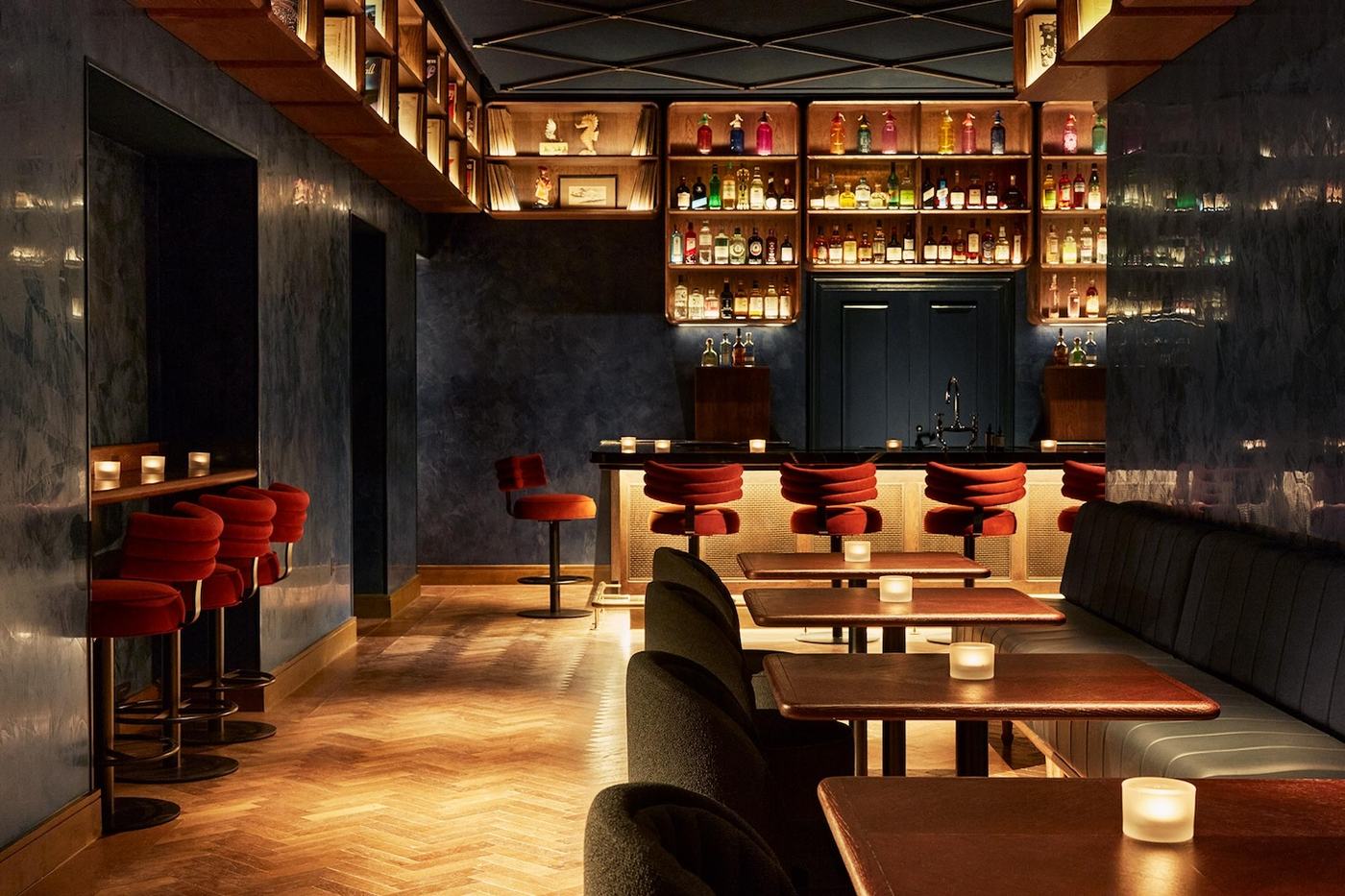
Go down a level for Black Lacquer, a low-lit bar that takes its name from vinyl and its manners from Tokyo's record bars. Booths are carved into the old pavement vaults, the walls are midnight blue, and the plaster is grooved in the pattern of a record. High shelving wraps the room and holds the collection, burnt-orange stools curve along the bar, and a false pantry hides the door to the kitchen. Order the fish finger bao or the prawn katsu sando with a sake, a shochu or a Japanese draft beer, and expect a vinyl selection every day and DJs on stage nights.
On the doorstep
The Barbican Centre and St Paul's Cathedral are both within an easy walk, Clerkenwell's design showrooms lie to the north, and the Thames path is a short stroll south for a riverside view of the City. Fabric, the techno club, is just up the road, which tells you which end of the evening Black Lacquer is built to serve. For the morning after, the riverside walk gives the City a clean horizon.
Late, with a record turning below the pavement and the Old Bailey quiet across the street, the building looks pleased with its second act.


