
Behind the bar at The Derby, where most hotels would hang a mirror, there is stained glass. The bar is a horseshoe, the glass rises behind the spirits, and a few paces beyond the hotel's windows lies the garden of St Dunstan in the East. The reference is deliberate. A man named Holbech commissioned a window for that church in 1393, and the hotel's coloured glass takes its cue from him.

The Derby London City, a Curio Collection by Hilton hotel, opened in April 2026 at 5 to 10 Great Tower Street, a short walk from the Tower of London. It is a building with a banking life behind it, and the best of the hotel is the way it keeps reminding you, in brass, in leopard print and in a cocktail hour timed to its own address.
In the bedrooms the marque is hidden inside the cups, so you find it only at the bottom of your tea.


A bank, turned to face the street
The block was a bank and later an office, which a City of London Corporation representative judged a dated and difficult proposition. Dominus, the developer, delivered the retrofit with the architects Studio Moren and Axiom, keeping the existing structure and façade and adding a roof extension in the mansard form of its neighbours. The architects described the old banking frontage as shut off from the street, and the clearest change is at pavement level: a corner that once turned its back on the street now holds a restaurant, a coffeehouse and a bar. Dominus Hospitality runs the hotel, and the design team chose to dress the new public rooms in the area's own history rather than in the glass-and-steel image of the modern Square Mile.

Leopards, drawers and forgotten Londoners
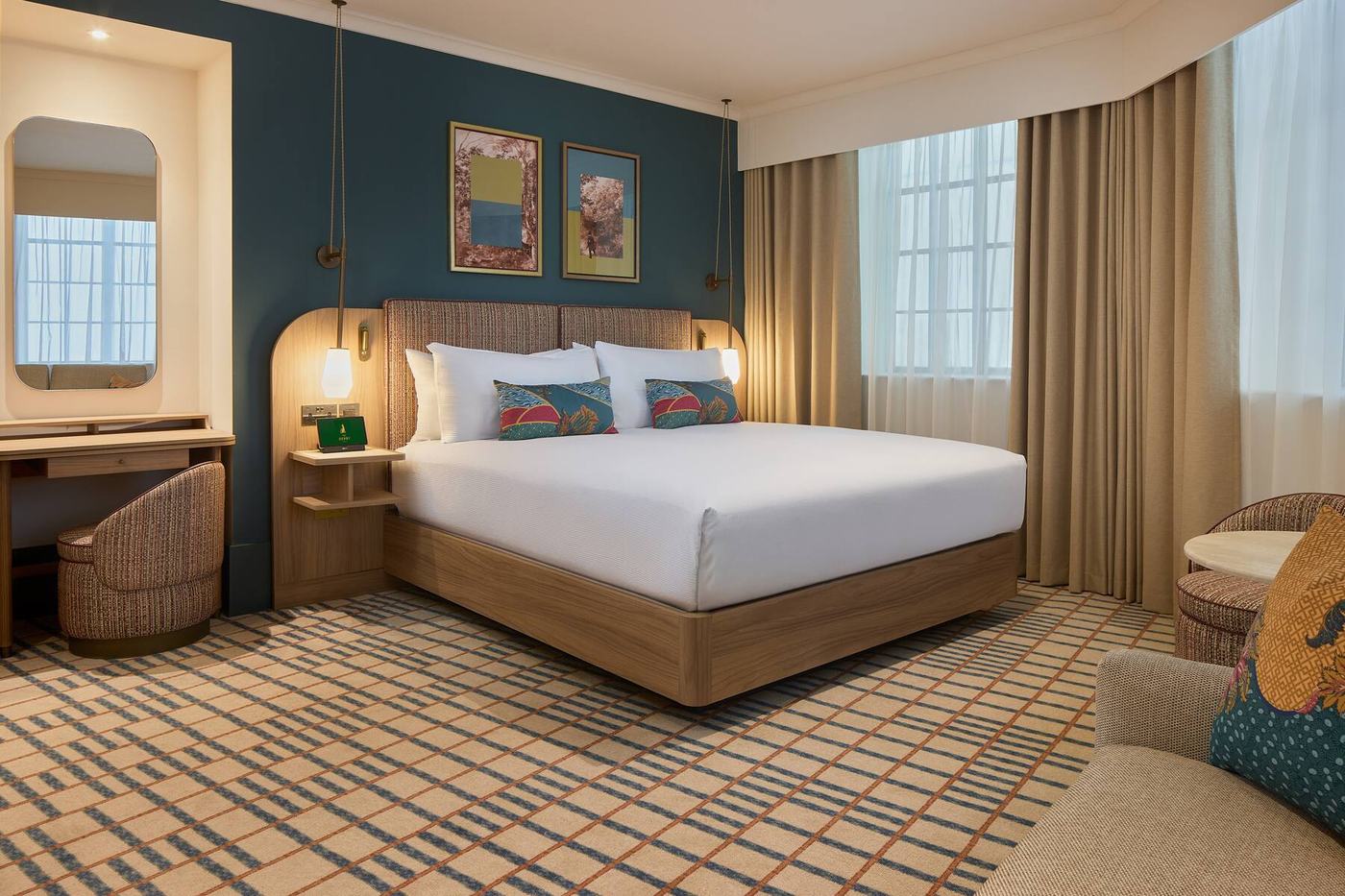
AvroKO designed the interiors and Aylott + Van Tromp the identity, and between them they built the hotel on City figures few visitors would know. The name is the bowler hat, the derby worn by nineteenth-century financiers. The leopard that wears it comes from the leopard's head hallmark of the Goldsmiths' Guild, the old mark of quality, and it turns up on keycards and cushions and, for anyone who finishes the tea, inside the cup.


At reception, the Treasury Wall is a wall of numbered drawers in burnished brass, rising from floor to ceiling, that guests open with keys, a wink at the safe-deposit boxes of the building's banking past. Wayfinding is done in brass plates on timber panelling. William Heryot, a draper and Lord Mayor, gives his name to the leopard-pattern robes in the suites, and Sir Robert Tate, a mercer and Lord Mayor who owned property on Great Tower Street, stands behind Mercer's Market, a monthly showcase for local artists and makers.

The room to book
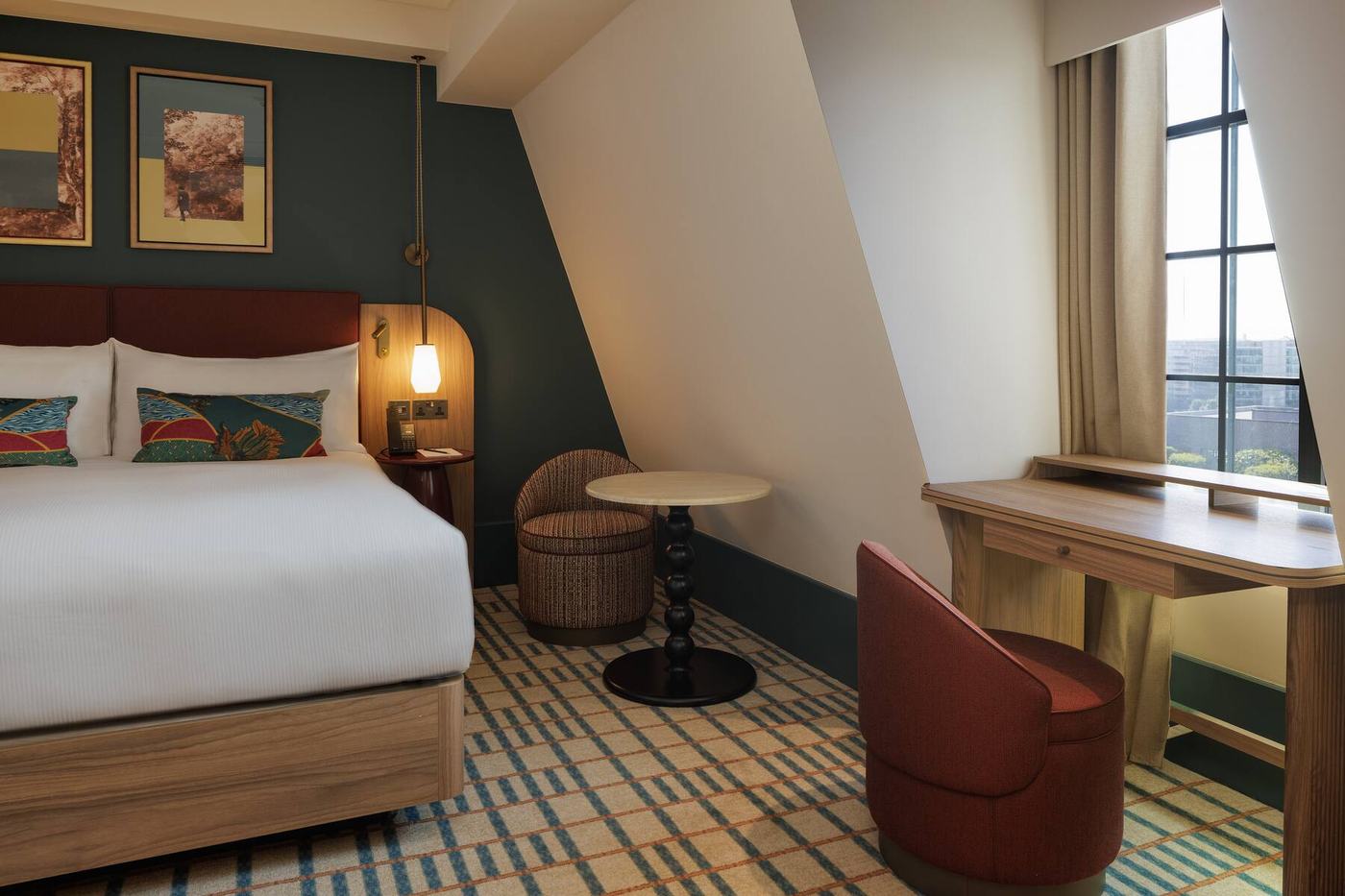
Ask for a signature suite, which the hotel describes as looking across the City skyline, and expect the Heryot robes to come with it. The Spacious King Junior Suite is the room Hilton's own page names, a gentler way into the same idea. Neither is the main reason to choose the hotel. There is a fitness centre but no spa to speak of, and the draw is the building itself and what has been done with its ground floor.

Rycrofte's, and the five-ten ritual
Rycrofte's is the hotel's restaurant, coffeehouse and bar in one, named for Sir John Rycrofte, Sergeant of the Larder to Henry VII and Henry VIII, who is believed to be buried in the churchyard next door. Its windows look onto the ruins, the coffeehouse runs over two levels with bar-style seating, and its menus are arched, die-cut and printed in gold foil on forest green. The cooking is classic British dishes with a twist: start with the beetroot-cured salmon, then choose between the slow-braised short rib, the seasonal vegetable pie or ale-battered fish and chips, and finish with Eton mess or the honey apple tart.
Afternoon tea is the Guild Tea Ritual, made with Newby Teas and served on a stand inspired by stained glass, overlooking the garden. Then there is the hour that gives the bar its signature: every evening at 5.10pm, a match for the street number, Rycrofte's pours a cocktail of the day for Golden Hour. It is the kind of joke a bank would never have allowed.
On the doorstep
St Dunstan's is the neighbour to know. The church dates to the early twelfth century, was repaired after the Great Fire of 1666 and given a new steeple by Christopher Wren, and was gutted by bombing in 1941. Wren's steeple came through, and the City of London Corporation opened the ruins as a public garden in 1971. Beyond it, the walks are short: the Tower of London at 0.2 miles, Leadenhall Market at 0.3, Tower Bridge at 0.4, St Katharine Docks at 0.5, the Royal Exchange at 0.6 and St Paul's Cathedral at 0.9.
At ten past five, with the brass drawers behind reception and the glass behind the bar, the old bank keeps late hours at last.


