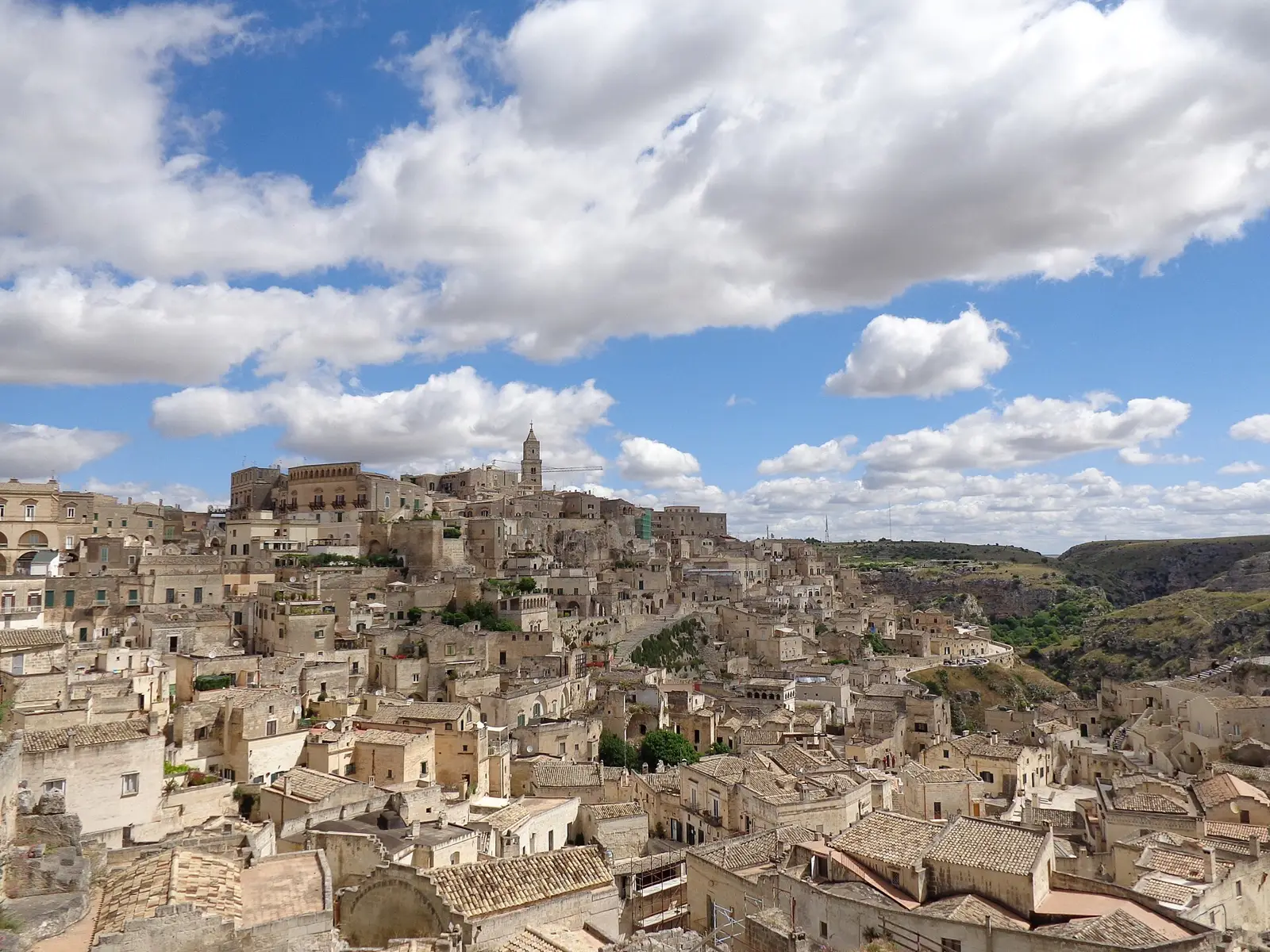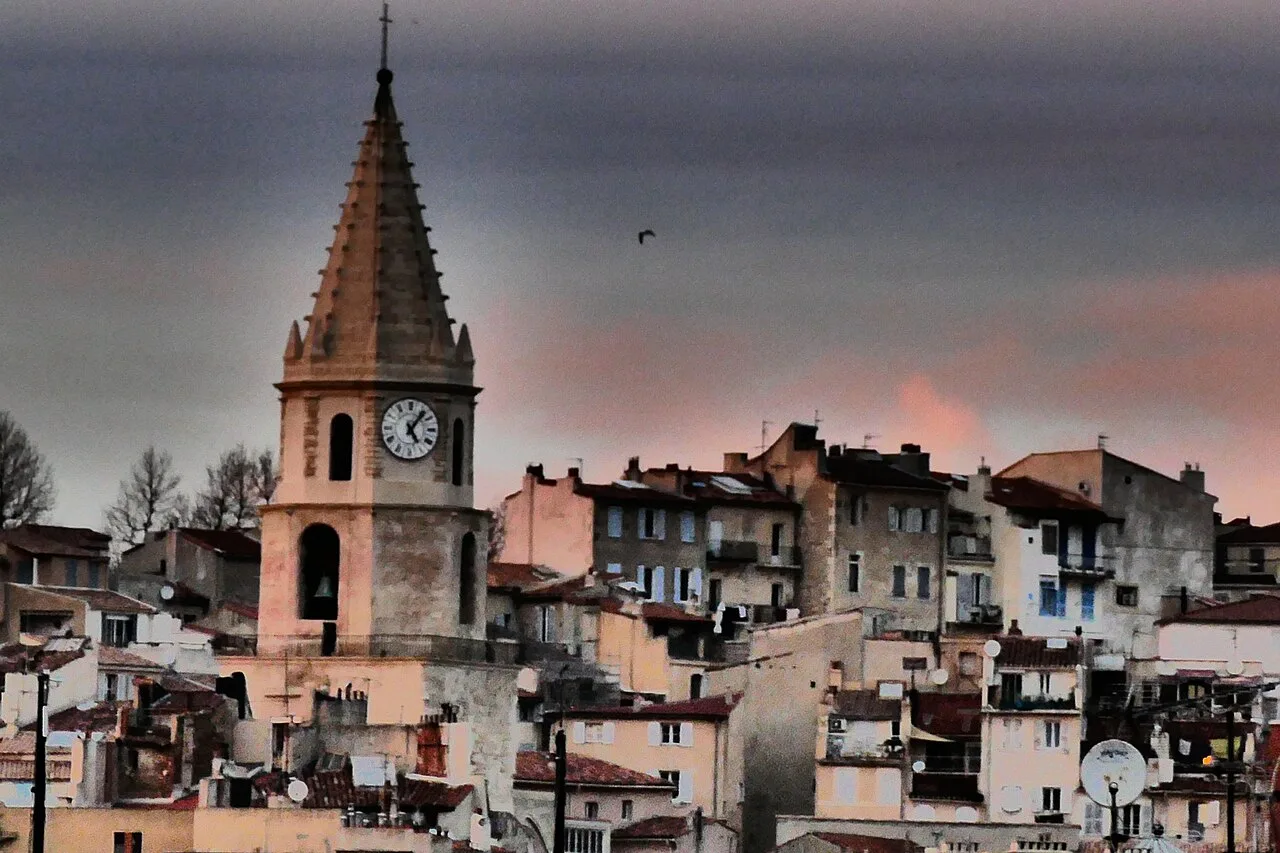
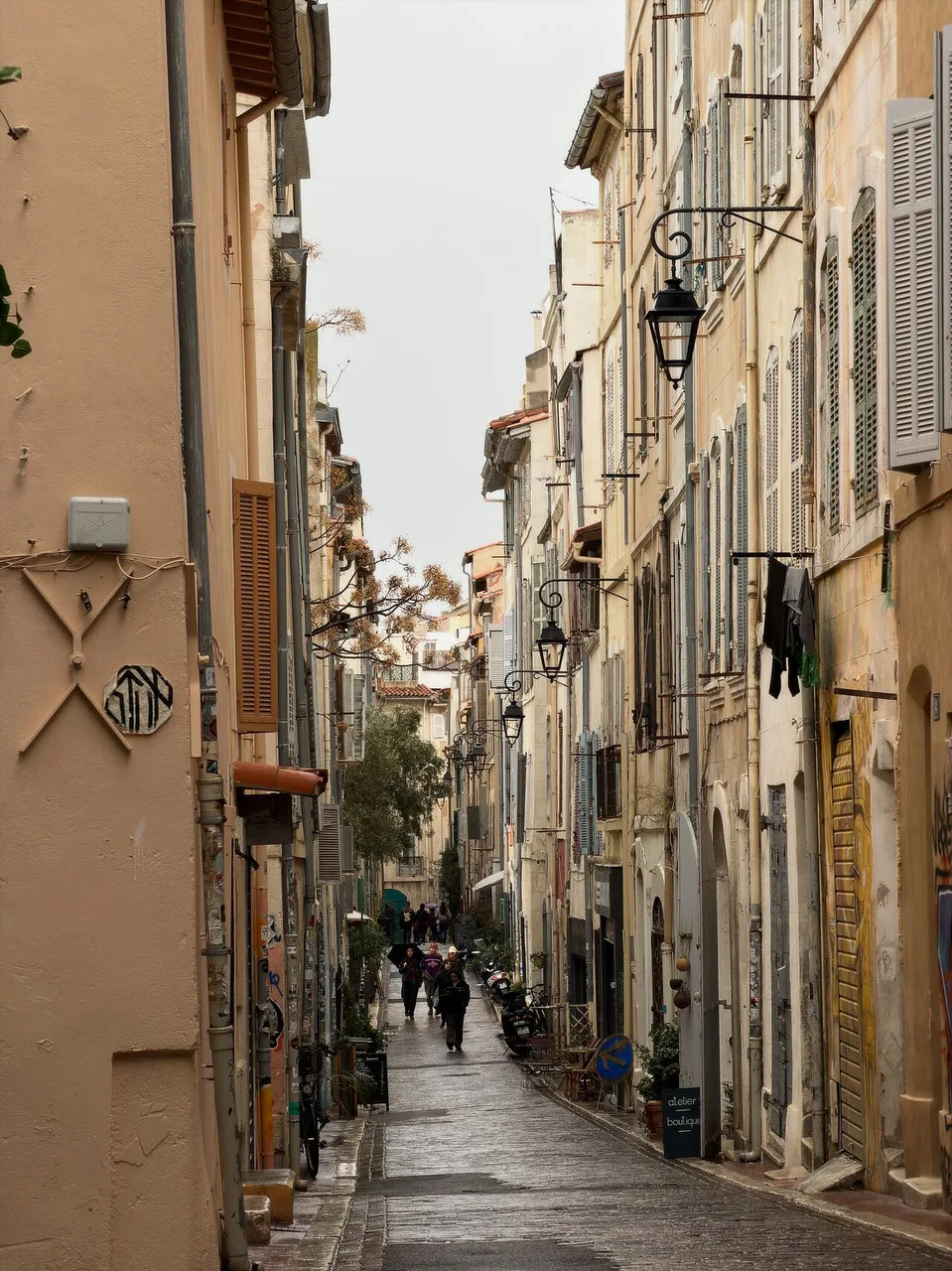
Start low and climb. Le Panier sits on the ground where Greek settlers founded Massalia around 600 BC, choosing a high spot near the sea, and the layout still follows the slope: narrow lanes that turn, steps that arrive without warning, and a view of the water at the end of each rise.
Where to begin
Begin at Place de Lenche, which sits on the site of the ancient Greek agora. Beneath it lie the Saint-Sauveur cellars, thought to be third-century BC cisterns, though they are not open to visitors. From there the streets fold upward past small cafe terraces, artists' studios and designers' shops, with street art on many of the walls.
A quarter with a hard history
The district's story is not tidy. In the nineteenth and early twentieth centuries it had a poor reputation. On 22 to 24 January 1943, French police working with German forces carried out a house-to-house roundup in the Old Port quarter, with the resistance as the stated pretext. Thousands of people were arrested, many Jewish residents were deported, and some 20,000 or more were forced out of their homes. About 1,500 buildings were then dynamited. Figures differ by source, and the district's present streets date from the rebuilding that followed.
A few buildings survived. The Hôtel de Cabre, built in 1535, was moved in one piece and turned ninety degrees to fit the new street plan, and the Maison Diamantée, with its diamond-pointed stone front, was saved from demolition and listed as a historic monument in 1925.
Two landmarks on the climb
The Vieille Charité, a former hospice completed in the eighteenth century, is now a cultural centre with exhibitions through the year. The old Hôtel-Dieu, whose hospital roots go back to the twelfth century, has been a hotel since 2013.
The top
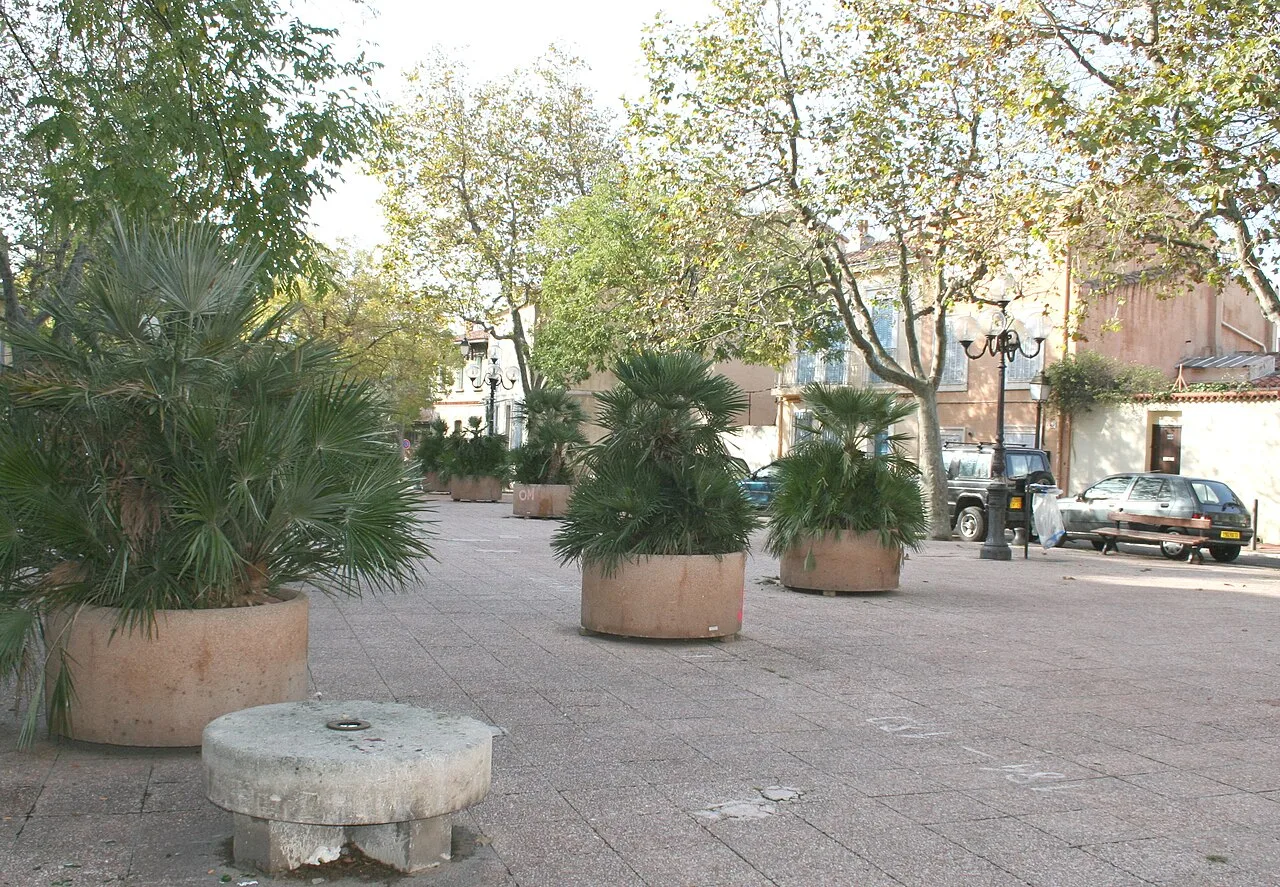
Finish at Place des Moulins, the highest point in the quarter, named for the fifteen or so windmills that stood here in the seventeenth century. Beneath it lies a vast cistern from 1850. The climb is the point, so wear shoes you trust, and keep going until the sea comes back into view.